

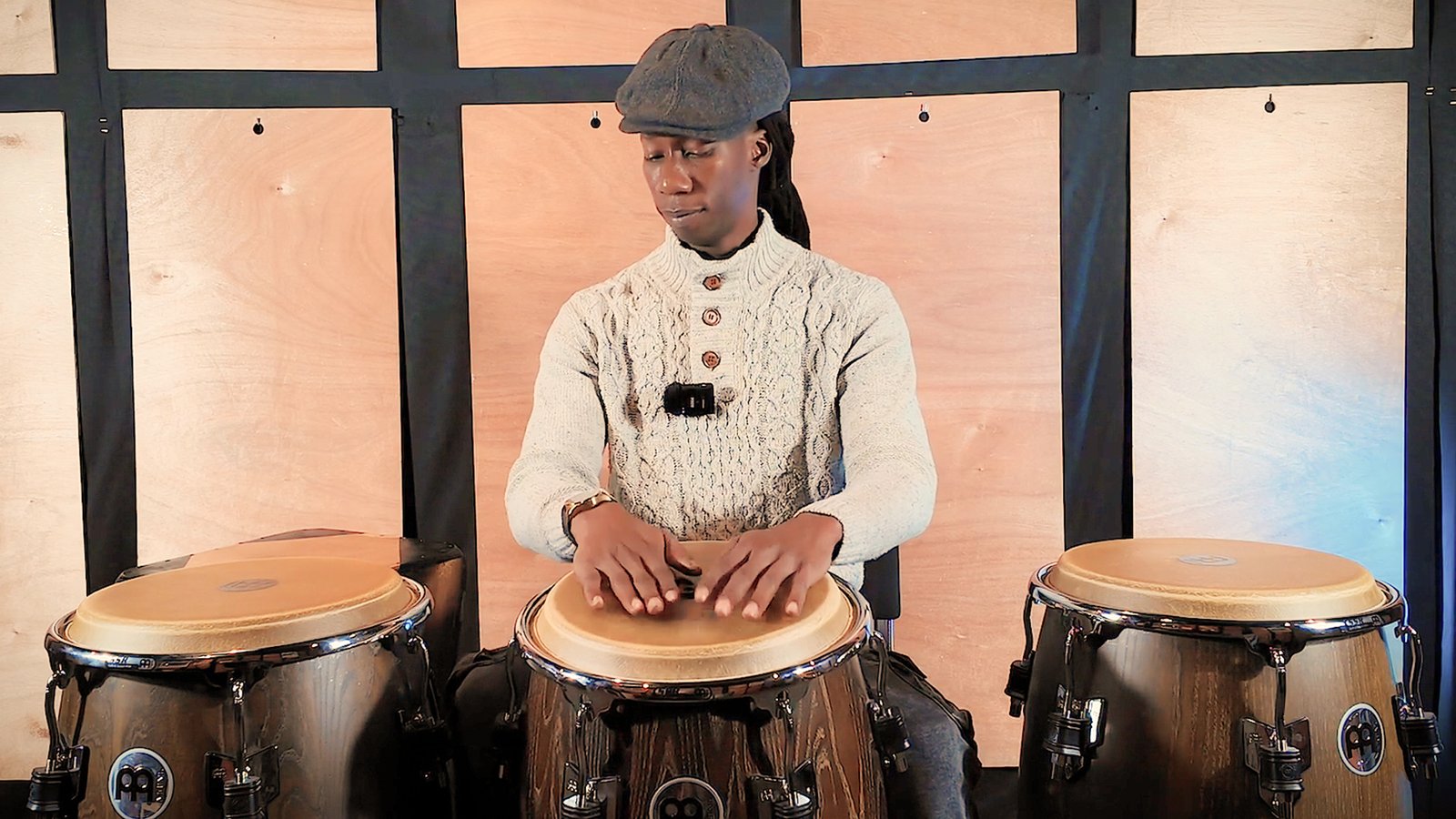

The first episode focuses on the essential pulse of the 3-2: how to locate the strong beat, where the abiertos fall, and how the ghost notes function to generate masacote without standing out. Machito shows the connection between the traditional base and Afro-Cuban influences in 6/8, explaining why this pattern must feel solid before exploring variations.
This episode explores the interaction with the tumbador in greater depth. You will study how to ‘open’ the base to create space for the call, how to maintain the axis through the abiertos, and when to return to the bajo without losing the thread of the 6/8. The idea of expanding the compás is also introduced so you don’t feel compressed when the tempo increases.
At this stage the pattern gains mobility. A more picado style is developed, allowing you to play with displacements and with the strong beat in the opposite hand. Machito explains how to alternate between the continuous pattern and this more modern version, and how the tumbador, through a llamado, can trigger a turn toward montuno.
The final class transforms a slow variation with presionados into a complete base. You will learn how to sustain a groove without mixing codes, how to control the time so as not to drag behind, and how to use 4- and 8-beat frameworks to organize the musical discourse. This session summarizes how each technical element supports the clarity of the 3-2.
In this bonus video, Machito deepens the Columbia 3–2 groove, showing how to work with variations, timing shifts, and phrasing expansion.