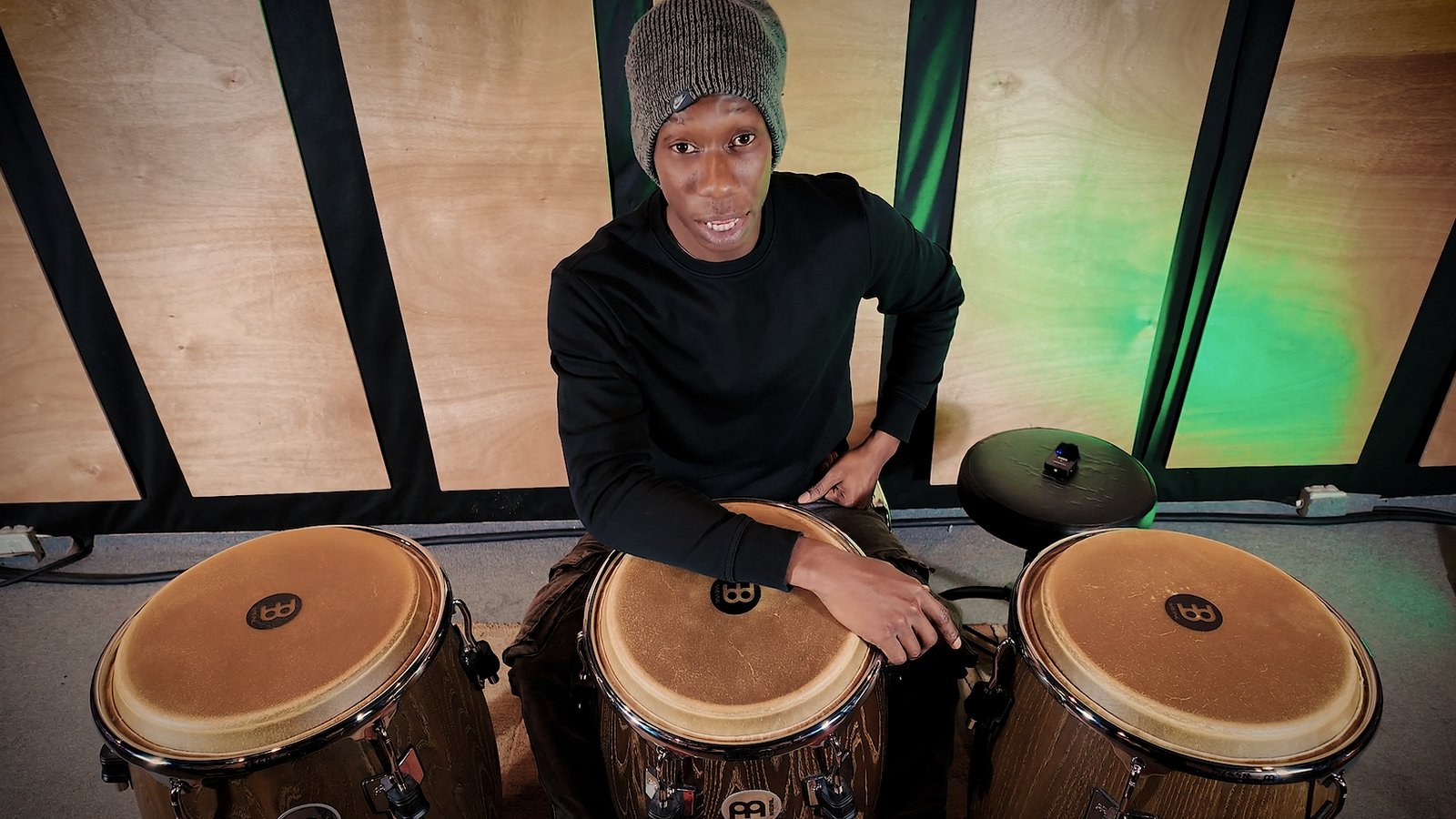

Machito goes through the origins of the tres-dos, its first placement on the "one" of the clave, and the evolution toward its modern position. He differentiates 3+2 clave vs. ‘2+3’ perception and demonstrates how the set historically sounded with tumbador and tres-dos.
We continue with how the march is built: "tapados", "abiertos" and "mazacotes", with the left hand constant and the right hand supporting. You will also learn how to work the "mano adentro" & "mano atrás" technique, counting in 4- and 8-beats, and how to fix the bass tone on the second stroke of the clave. Everything with emphasis on pulse cleanliness before adding "fantasmas".
In this episode you’ll practice entrances after the "four", the "one" and the "two", and how to return to the march without losing time. Introduction of response-type variations to the tumbador, emphasizing retention and reflexes without invading the space of the quinto.
At the end of this course Machito adds "presionados" and explores the influence of 6/8 for melodic "color". Three variations with the same entrance, combinations between them, and use of the bass tone as support within more evolved responses, ensuring the march never breaks.
In this bonus video, Machito explains how the tres–dos of Guaguancó evolved in rumba, shaping its groove and interaction. He emphasizes playing with clarity, discipline, and awareness in call-and-response.