The Quinto of Yambu — Tradition, Cadence & Evolution

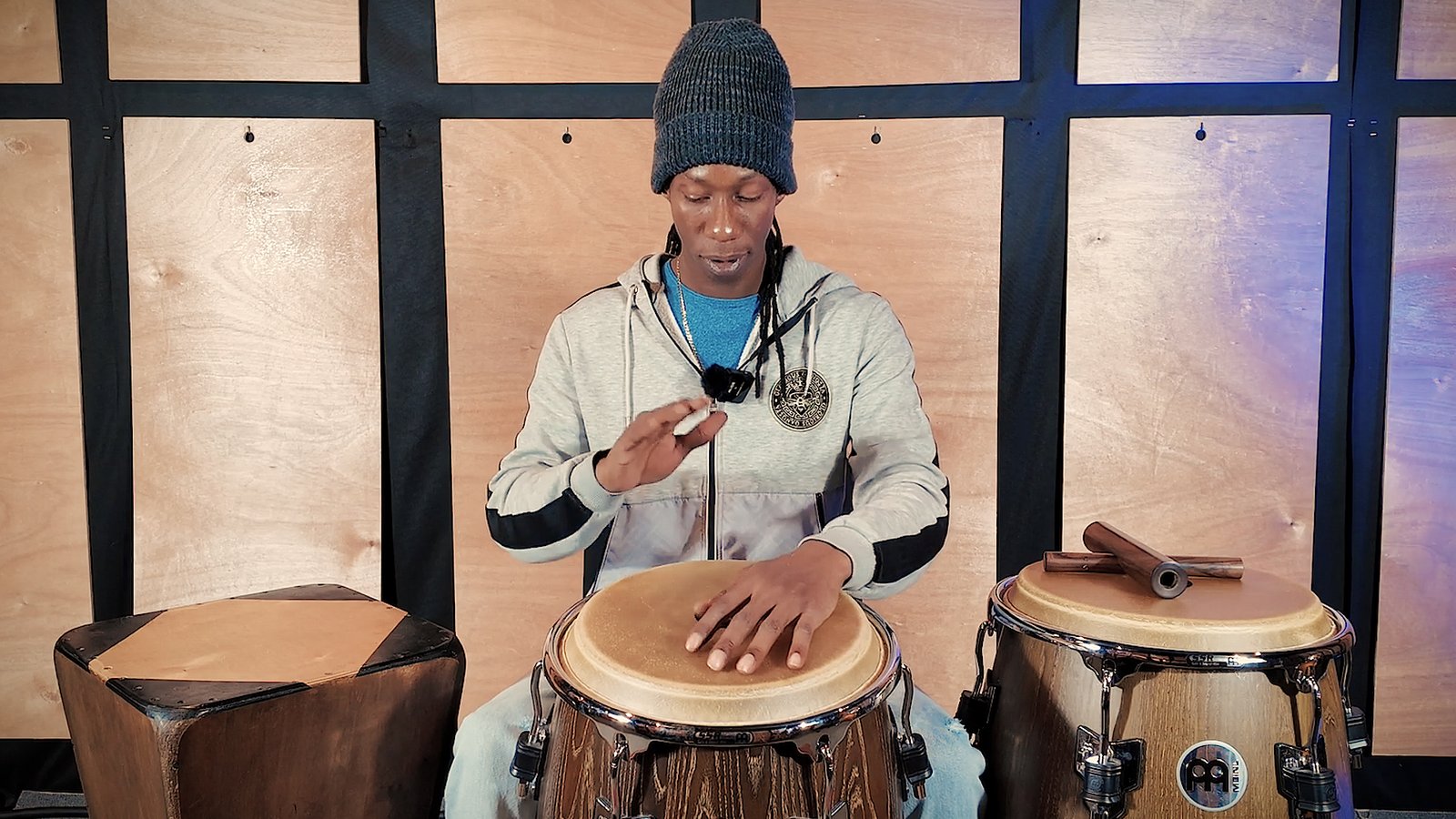
This course explores how the quinto functions within Yambú, one of the most cadential and delicate expressions of Cuban rumba. Through cadence, space, canto, and traditional codes, Machito guides a path from the traditional language of the quinto toward its evolution, showing how new resources can be incorporated while remaining connected to the roots.

What does the course cover?

  • The role of the quinto in traditional Yambú: slow cadence, space, and silence.
  • Building a solid quinto base using muted tones and points of support.
  • The relationship between canto, clave, and quinto as the foundation of the rhythmic discourse.
  • Phrasing in 4- and 8-beat cycles: repetition, variation, and return to the cliché.
  • Traditional Yambú codes: when to enter, when to exit, and how to create space.
  • The evolution of Yambú: incorporating the tres-dos and contemporary resources without losing the roots.

Main ideas of the course

  1. Fewer strokes, more intention.
  2. Yambú is space, silence and cadence.
  3. The quinto speaks, but first it listens.
  4. Tradition does not limit: it organizes.
  5. Without roots, there is no evolution.

In this course, you will explore how to:

  • Build a solid quinto base in Yambú using muted tones and points of support.
  • Sustain the slow cadence without breaking the time or invading the canto.
  • Phrase clearly and with control in 4- and 8-beat cycles.
  • Enter and exit variations without losing the cliché or the context.
  • Improvise with intention while respecting the traditional codes of Yambú.

Key terms listed in the order they appear in the episodes.

  • Yambú: A rumba style characterized by a slow tempo, deep cadence, and the expressive use of space and silence.

  • Quinto: Solo drum of the rumba that improvises within specific musical codes and dialogues with the canto.

  • Tumbador: The low-pitched supporting drum that provides the rhythmic foundation and cadence of Yambú.

  • Muted Tone (Tapado): A muted stroke used as a point of support in traditional Yambú playing.

  • Cadence: The natural flow, breathing, and balanced movement of time within the music.

  • Cliché: A recurring base pattern that serves as a point of departure and return for the quinto.

  • Points of Support: Key reference strokes that stabilize the groove and provide orientation for phrasing and variation.
  • Phrasing (Fraseo): The organization of strokes and ideas into meaningful rhythmic statementse.
  • Speaking (Hablar): The act of improvising on the quinto while maintaining the musical context and respecting the ensemble.

  • Singer’s Space: The musical space occupied by the vocal line, which the quinto must respect and support rather than overpower.

  • 4- and 8-Beat Cycles: The rhythmic frameworks used to organize phrases, variations, and returns to the base.

  • Catá: The timekeeping pattern that, together with the clave and canto, helps guide the quinto.
  • Base: The structural foundation from which phrases and variations are developed.

  • Variation: A temporary modification of the base pattern used to expand the musical discourse.

  • Montuno: The section featuring repeated chorus phrases, increased energy, and greater freedom for interaction and improvisation.

  • Entering and exiting: The essential quinto practice of moving in and out of variations while maintaining the flow of the music.

  • Tres-Dos: Intermediate drum that expands rhythmic support.

  • Displacement: The shifting of accents or phrases to create movement and tension within the cycle.

  • Contemporary language: Modern resources and expressive devices that expand the traditional vocabulary of the quinto.

  • Syncopation: Accents played against the main pulse that create the characteristic feel of Yambú and rumba.

  • Code: An unwritten rule governing interaction, phrasing, and behavior within the rumba tradition.

  • Evolution: CThe development of the language of the quinto while remaining connected to its traditional roots.

Starter:

1 course pass

9

/month

+ tax as applicable

Pro:

3 course passes

19

/month

+ tax as applicable

Master:

9 course passes

49

/month

+ tax as applicable

Elite:

Full acces to all courses

299

/year

+ tax as applicable

Course details
Duration 65 min
Episodes 5
Level Intermediate

Explore more courses

Contact
FAQ

© 2026 MJ Events. All Rights Reserved.

Disclaimer: Educational content for personal use only. Individual progress may vary depending on personal practice and experience.

Welcome back