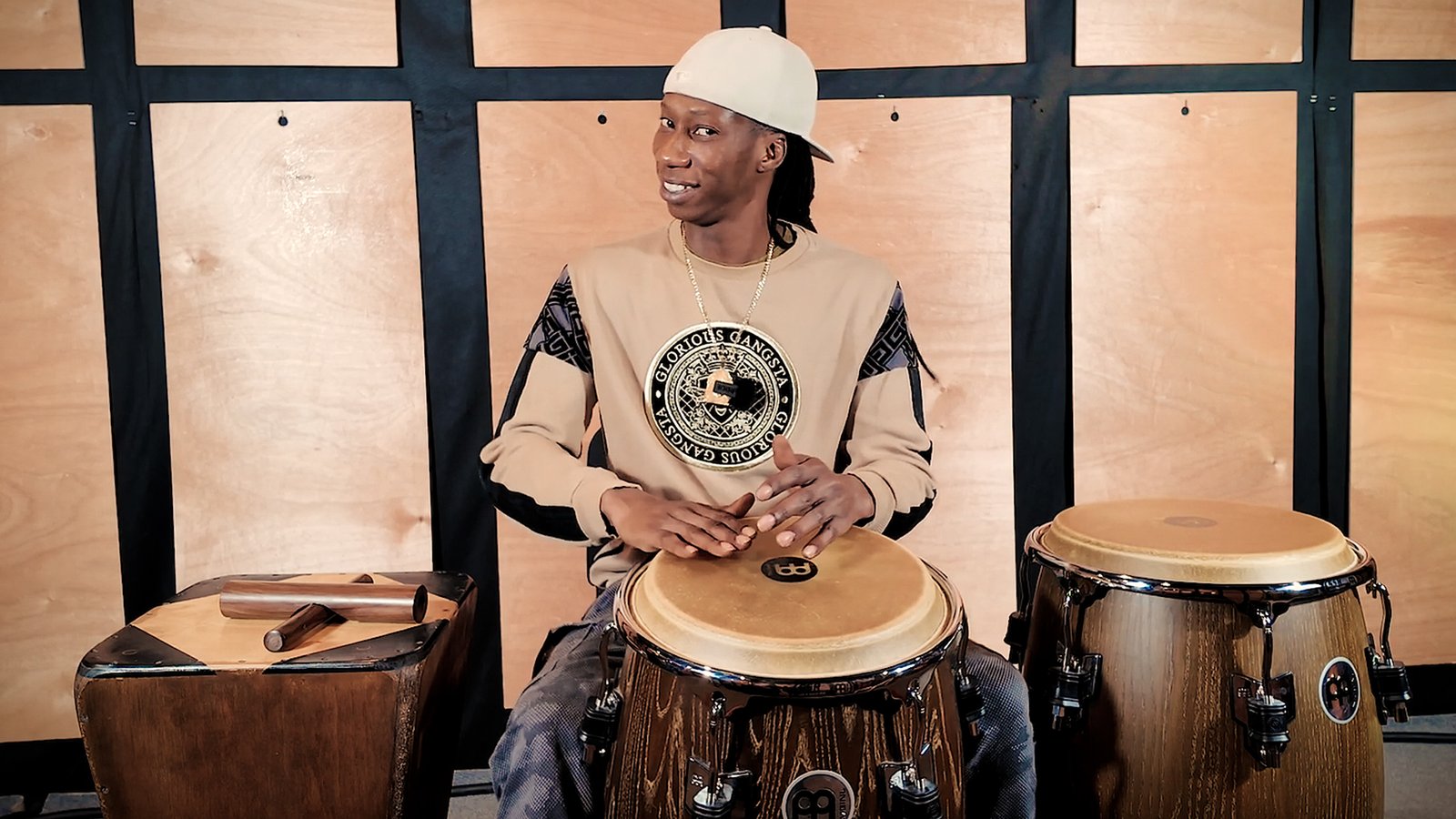
The Quinto of Columbia — Root, Codes & Evolution

This course explores the language of the quinto in Columbia, from its traditional “de solar” roots to its modern evolution. Machito presents the relationship between canto, groove, tumbador, and tres-dos, the influence of the six-eight tradition, and the rhythmic codes that define the style. Through new combinations, expanded techniques, and interaction with the dancer in the montuno, the course develops a complete path from foundation to expression.

What does the course cover?

  • Traditional Columbia quinto: the llorado, the canto, and the influence of the six-eight tradition.
  • The relationship between the quinto, tumbador, and tres-dos within the Columbia groove.
  • Building and developing a quinto base through cliché, syncopation, and points of support.
  • Clean entries and exits: moving phrases through different points of the clave cycle.
  • The evolution of the Columbia quinto through muted tones in both hands, flams, drum rolls, and new combinations.
  • The montuno: interaction with the dancer, rhythmic dialogue, and greater freedom within the traditional codes.
  • Review of the traditional base and practical resources for study and repetition.

Main ideas of the course

  1. The root leads: first the base, then evolution.
  2. The quinto floats: it does not duplicate the groove of the tumbador and the tres-dos.
  3. Intentional entries, clean returns.
  4. In the montuno, dance, canto, and groove guide your discourse.
  5. Clarity weighs more than speed.

In this course, you will explore how to:

  • Establish a solid quinto of Columbia base.
  • Float above the groove of the tumbador and tres-dos without duplicating it.
  • Enter and exit variations clearly through different points of the clave cycle.
  • Use both hands to expand your vocabulary without losing the traditional foundation.
  • Relocate combinations within the cycle to develop flexibility and phrasing.
  • Listen to and respond to the singer and the dancer according to the musical context.
  • Manage energy and freedom while respecting the codes of the style.

Key terms listed in the order they appear in the episodes.

  • Quinto: Lead drum of the rumba that improvises within specific musical codes.
  • Llorado: Opening vocal call that introduces the canto.
  • Canto: Vocal line that guides the phrasing of the quinto.
  • Cliché / Base: Recurring pattern from which variations are developed.
  • Six-Eight Feel: Rhythmic influence derived from Afrocuban six-eight traditions.
  • Tumbador: Supporting drum that provides the main groove.
  • Tres-Dos: Supporting drum that interacts with the tumbador and reinforces the groove.
  • To Float: To improvise above the groove without duplicating it.
  • Muted Tone (Tapado): Muted stroke used as a point of support.
  • Flam: Two nearly simultaneous strokes that create a wide accent.
  • Drum Roll (Redoble): Rapid succession of strokes used as an expressive resource.
  • Entry and Exit (Entrada y Salida): Moving away from and returning to the base.
  • Entry Points: Positions within the clave cycle used to begin phrases and variations.
  • Displacement: Moving the same phrase to different points in the cycle.
  • Montuno: Section where the quinto expands its dialogue with the dancer, the canto, and the groove.
  • Codes: Unwritten rules that organize the relationship between musicians and dancers.
  • En Talla: Cuban expression meaning “we’re good” or “we’re on the right track.”
  • To Internalize: To repeat something until it becomes natural and automatic.

Starter:

1 course pass

9

/month

+ tax as applicable

Pro:

3 course passes

19

/month

+ tax as applicable

Master:

9 course passes

49

/month

+ tax as applicable

Elite:

Full acces to all courses

299

/year

+ tax as applicable

Course details
Duration 60 min
Episodes 5
Level Intermediate

Explore more courses

Contact
FAQ

© 2026 MJ Events. All Rights Reserved.

Disclaimer: Educational content for personal use only. Individual progress may vary depending on personal practice and experience.

Welcome back