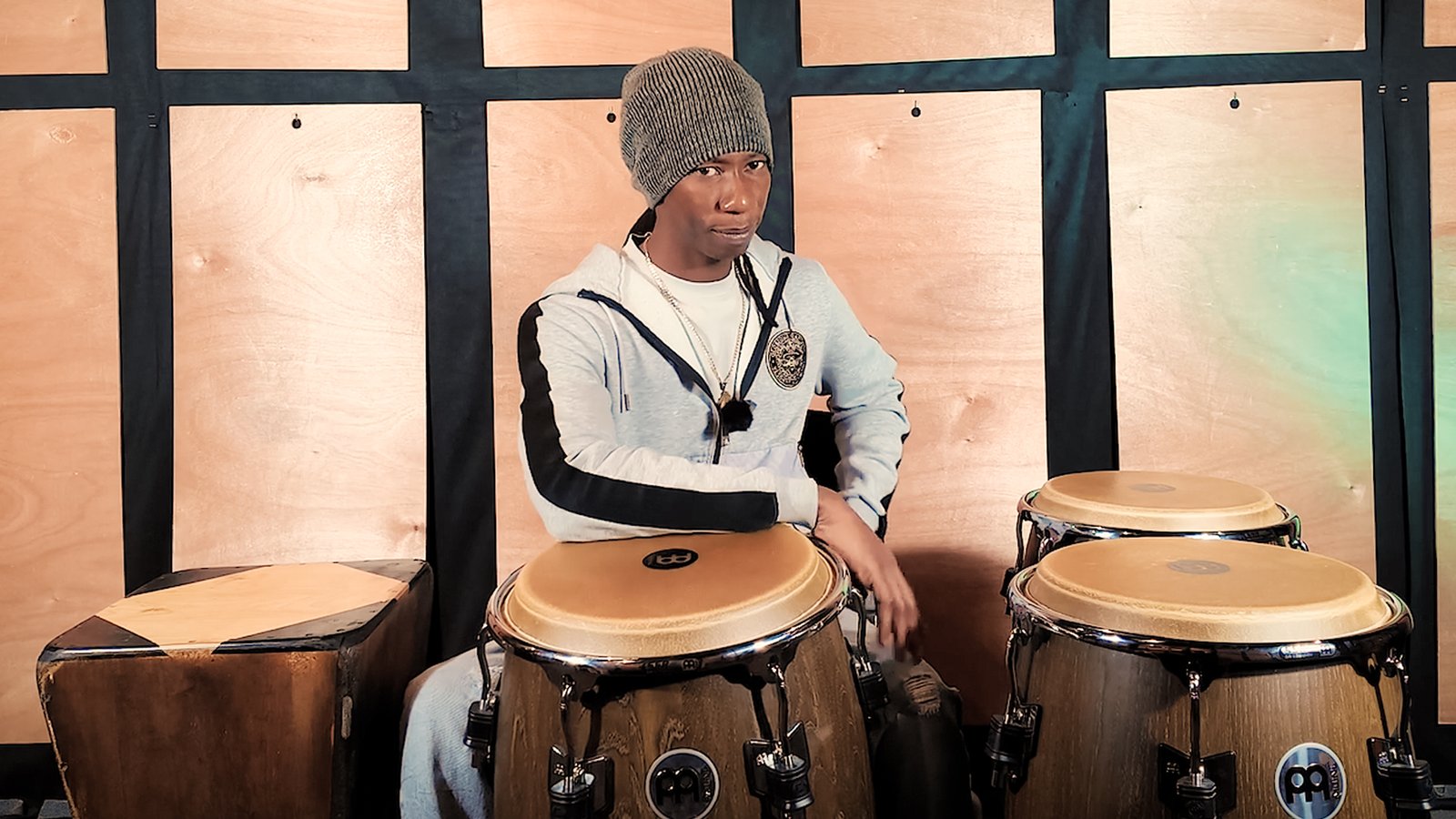
Tumbador in Yambú — Tradition, Variation & Flavor

This course takes you into the essence of the tumbador in Yambú, exploring the traditional march, the use of the double low tone, and the flow of time through 4- and 8-beat cycles. With Marchito, you’ll learn when to introduce variations based on the lalaleo, the lead singer, and the chorus—and how a variation can become part of the base. You’ll also learn how to integrate conga and cajón raspadura, including both Havana and Matanzas approaches, always respecting the tradition of the style.

What does the course cover?

  • The traditional Yambú march: slow breathing, clarity, and balance between low tones and open tones.
  • The low tone and its function as a starting point for variations
    4- and 8-beat cycles to expand musical phrasing without breaking the base.
  • Musical criteria for when to vary, based on the lead singer and the chorus.
  • How a variation can evolve into a new base using open tones and mazacotes.
  • Introduction of cajón raspadura and conga, with patterns played across two claves.
  • Characteristics of Matanzas Yambú, including accents and regional manoteo.

Main ideas of the course

  1. Root first: from march to variation to evolution, without losing the essence.
  2. In Yambú, clarity is more valuable than speed.
  3. Variation is born in the moment, guided by the singing and the chorus.
  4. Thinking in 4- and 8-beat cycles creates space for groove and phrasing.
  5. Havana and Matanzas traditions share the same feeling.

In this course, you will explore how to:

  • Maintain a firm and clear Yambú march with balanced low tones and mazacotes.
  • Apply the double low tone without breaking the pulse or the clave.
  • Use 4- and 8-beat cycles for clean entries, exits, and returns.
  • Decide when to vary based on the singer and the chorus, without invading their space.
  • Turn a variation into a stable base on tumbador and cajón.
  • Identify and execute Matanzas Yambú accents and manoteo.

Key terms listed in the order they appear in the episodes.

  • Yambú: Slow, elegant and breathing rumba style.

  • Lalaleo: Sung introduction that sets pitch and signals the entrance of the singing.

  • Double Bass/Low Tone (Doble Bajo): Two consecutive bass strokes used for accent or variation.

  • 4-/8-Beat Cycle: Counting approach used to organize variations and rhythmic breathing.

  • Manoteo: Hand movement that fills the rhythmic pattern.

  • Open Tone (Abierto): Resonant and clear stroke on the tumbador.

  • Ghost Note (Fantasma): Soft stroke that creates internal weight in the groove.

  • Entry / Exit: Exact moment to begin or end a variation.

  • Chorus (Coro): Repetitive vocal section where energy increases.

  • Polyrhythm: Superimposition of rhythms that can alter traditional character if overused.

  • Cajón Raspadura: Wooden box used as a rumba instrument.

  • Over Two Claves: Repeating a pattern across two full clave cycles.

  • Nuances (Matices): Changes in volume or accents that create expression.

  • Evolved Base: Variation that becomes a new stable march.

  • Hand Repetition: Technique where one hand plays two consecutive strokes to sustain the pattern.

  • Matanzas Signature: Characteristic Matanzas style with its own accents and manoteo.

  • Codes: Practical rules about when to vary and how to interact with singing and other drums.
  • Low Tones (Graves): Low strokes forming the foundation of Yambú.

  • Havana / Matanzas: Two distinct regional approaches within rumba.

Starter:

1 course pass/mo.

9

/month

+ tax as applicable

Pro:

3 course passes/mo.

19

/month

+ tax as applicable

Master:

12 course passes/mo.

59

/month

+ tax as applicable

Elite Promo:

12 course passes/yr.

299

/year

+ tax as applicable

Course details
Duration 65 min
Episodes 5
Level Intermediate

Explore more courses

Welcome

Register form