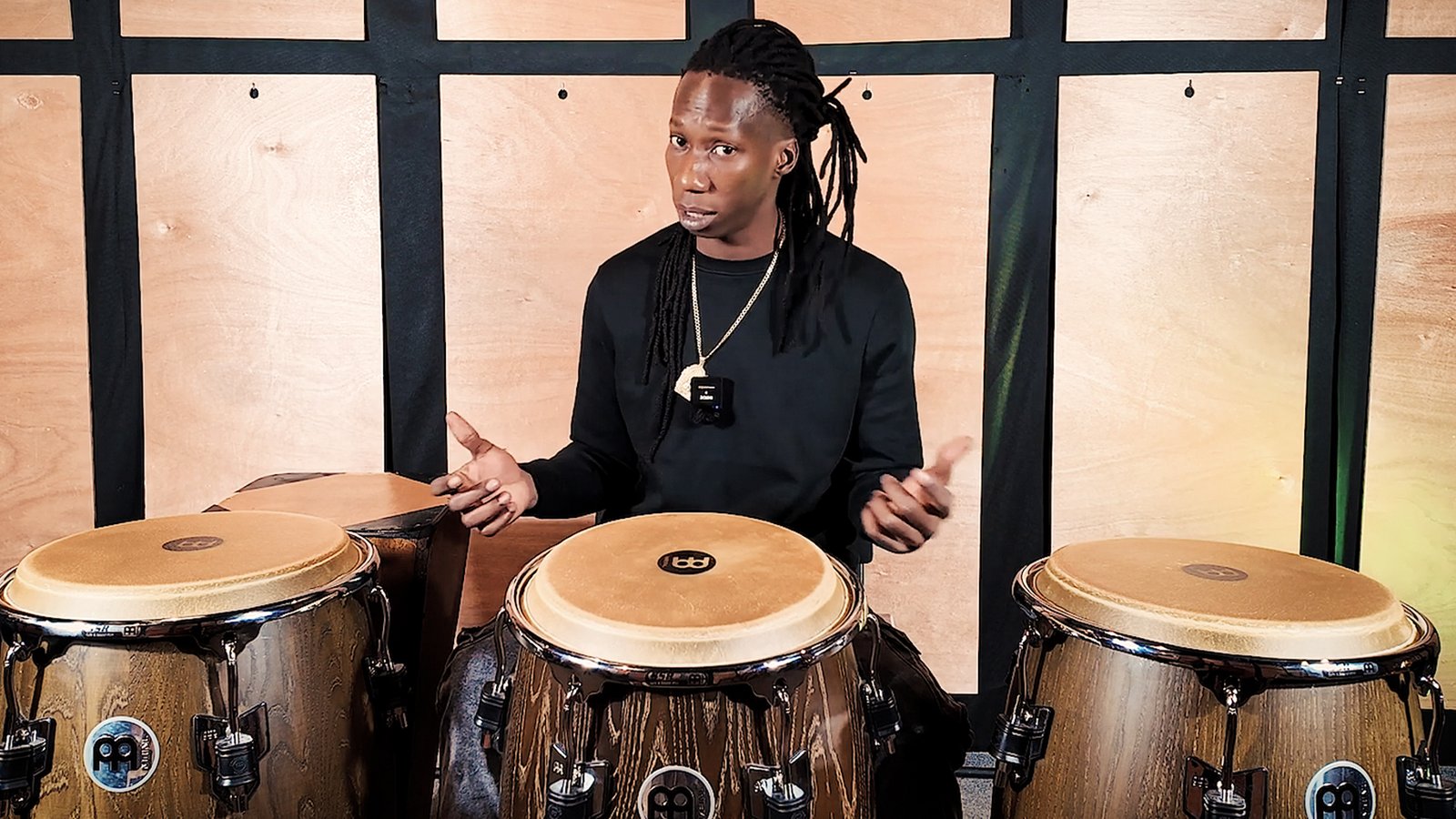

The tres-dos is presented in its historical context within Yambú, showing its entry and current function. With Machito, you will learn where to place the abiertos and how to respect the tumbador’s space to maintain a stable, coherent base.
In this episode, you explore how the tres-dos changes sound when played with manos adentro or manos atrás. You will learn to balance volume with the tumbador and maintain a clean cadence at all times, reinforcing the interaction between the two instruments.
This episode introduces the Matancero style, where the tres-dos incorporates syncopation and the characteristic célula ‘machuca–aplasta.’ You will learn the exact placement of strokes with the clave and counting, constructing clear and expressive patterns.
In the final episode, Machito returns to Havana to explore the cajón raspadura as tres-dos. You will learn the base pattern, its variations, and how to return cleanly to the structure without losing cadence. The episode consolidates the rhythmic identity of Havana and shows the evolution of the tres-dos within the city’s style.
In this bonus video, Machito reviews the different 3–2 Yambú patterns from Havana and Matanzas, highlighting their evolution beyond tradition. He reinforces the main grooves and encourages reflection on how the rhythm develops.