The Quinto of Columbia — Root, Codes & Evolution

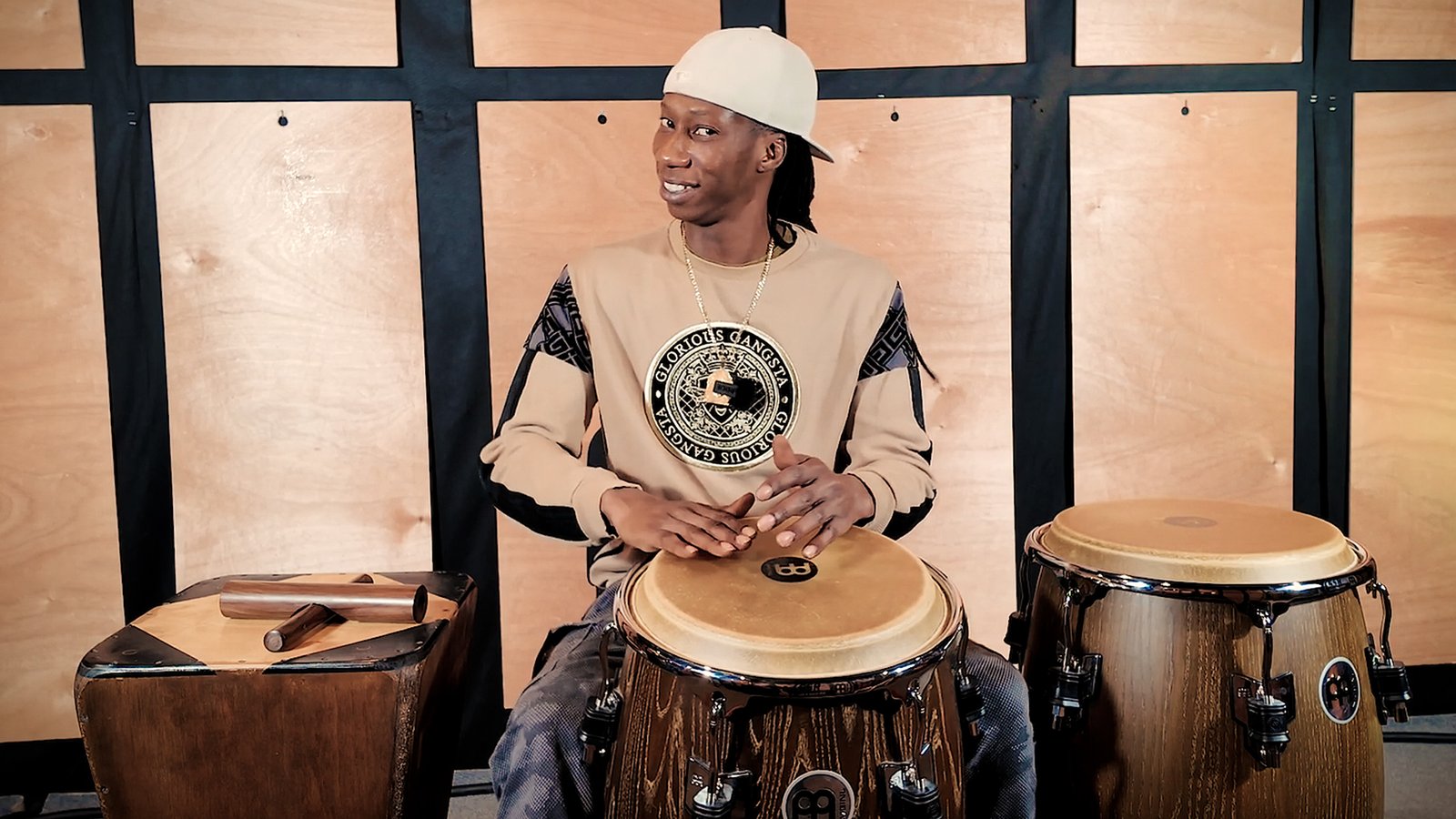
This course introduces you to the language of the quinto in Columbia: its traditional ‘de solar’ base, the relationship with the canto and the llorado, the influence of the 6/8 feeling, and its role as a solo drum that floats over the tumbador and the tres-dos. Starting from the root, Machito guides you toward more evolved techniques: use of both hands, entries after the 1. and after the 2. strike of clave, flams, redobles, displacements, and dialogue with the dancer in the montuno.

What does the course cover?

  • Traditional base of the quinto: entry after the llorado, relationship with the canto and 6/8 feeling.
  • Differences between the base groove (tumbador + tres dos) and the role of the quinto “on top.”
  • Clean entries: after the 1st and after the 2nd strike of clave.
  • Technical evolution: tapados with both hands, flams, redobles and displacement of combinations.
  • Codes of the montuno: dialogue with the dancer, strokes ‘in time’ and energy control.
  • Review of the traditional pattern and practical study resources.

Main ideas of the course

  1. The root leads: first the base, then evolution.
  2. The quinto floats: it does not invade the space of the tumbador or the tres-dos.
  3. Entries with intention, clean returns.
  4. In the montuno, dancer–canto–tiempo organize your discourse.
  5. Clarity weighs more than speed.

In this course, you will explore how to:

  • Establish a clear base of the quinto of Columbia.
  • Float over the groove of the tumbador and tres-dos without duplicating it.
  • Enter and exit variations clearly using structural points of the clave.
  • Use both hands to expand resources without losing the root.
  • Relocate combinations within the cycle to expand your vocabulary.
  • Read the singer and the dancer depending on the section (body vs. montuno).
  • Work with energy without losing cleanliness or codes.

Key terms listed in the order they appear in the episodes.

  • Quinto: Solo drum that marks calls and variations in Columbia.
  • Llorado: Initial vocal call that opens the canto.
  • Canto: Vocal line that defines spaces for the quinto.
  • Cliché / Base: Traditional pattern from which variations are built.
  • Feeling 6/8: Rhythmic feeling inherited from Bembé that ‘colors’ the phrasing.
  • Flotar: To improvise on top without duplicating the accompaniment rhythm.
  • Piti Kutú: Onomatopoeia that describes the continuous pulse of the tumbador and tres-dos; the ‘path’ over which the quinto floats.
  • Regreso Limpio: Returning to the base clearly after a variation.
  • Intencional Silence: Pause used to create space and musicality.
  • Tapado: Dry, muted stroke used to cut or mark.
  • Flam: Very close double attack between hands, producing a wide accent.
  • Redoble: Fast series of continuous strokes.
  • Entry After the 1st / 2nd Golpe: Structural moments to begin variations.
  • Desplazamiento: Moving the same combination to other positions in the cycle.
  • Montuno: Energetic section where variations and dialogue with the dance open up.
  • Códigos: Implicit rules between canto–quinto–groove–dance.
  • En Talla: Cuban expression meaning ‘we’re good,’ everything fits.
  • Interiorizar: To repeat until the body recognizes the code without thinking.

Starter:

1 course pass/mo.

9

/month

+ tax as applicable

Pro:

3 course passes/mo.

19

/month

+ tax as applicable

Master:

12 course passes/mo.

59

/month

+ tax as applicable

Elite Promo:

12 course passes/yr.

299

/year

+ tax as applicable

Course details
Duration 60 min
Episodes 7
Level Intermediate

Explore more courses

Welcome

Register form