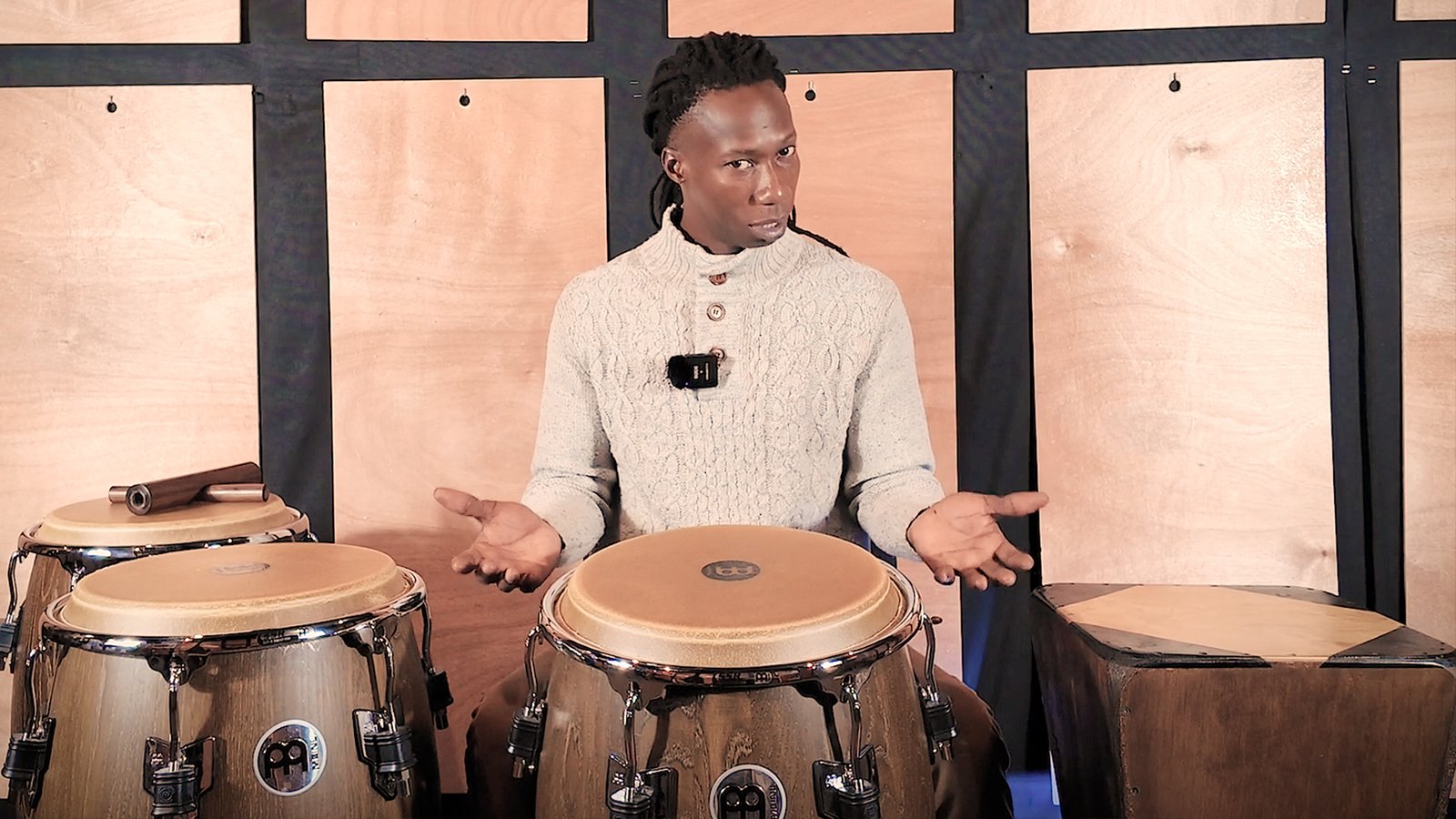
Machito explains the origins of the tumbador/salidor and its connection to the codfish crates and the Abakuá legacy. You’ll learn how these rhythmic cells form the foundation of the tumbador and how to work with the first clave using clean tone placement.
You go deeper into the first two bases of Guaguancó and learn how to add variations after the one without breaking the march. You’ll also explore the role of the repicador/quinto and how the setup evolved from the cajón to modern tumbadoras.
Here the low tone becomes part of the main base, and the left hand shifts from marking all four beats to emphasizing key points. You’ll practice with both the first and second clave, placing the low tone on the correct accents and enriching the pattern without losing the foundation.
You focus on traditional Yambú, working the muted-muted-bass tone march and using fantasmas to keep the groove elegant and fluid. You’ll also practice cajón raspadura and subtle variations that fit within the montuno and the base.
In this extra-video Machito demonstrates tumbador exercises for Guaguancó and Yambú, focusing on basic patterns, variations, and correct timing on the one. He emphasizes control of rhythm and sound while practicing.
Tumbador/Salidor: The first drum of the main rumba percussion section; it holds the time and the foundational pattern.
Carabal/Carabalí: Reference to the rhythmic tradition associated with Abakuá that inspires salidor patterns.
Cajón Raspadura: A modern, more ergonomic cajón that replaced the older cajón maleta in many contexts.
Repicador/Quinto: The drum that originally improvised; today known as the quinto in modern rumba.
Tres‑Dos: Traditional tumbadora role that carries the higher voice and transitional phrasing within the rumba groove.
Muted tone (Tapado): A muted stroke with no resonance, used to support the rhythm.
Open Tone (Abierto): A resonant, clear stroke that projects the drum’s tone.
First/Second Clave: Ways of articulating the clave pattern that determine how the tumbador enters.
White/Black Clave: Traditional internal terminology; equivalent to first/second clave.
Codes: Rhythmic signals or relationships that link the tumbador’s pattern to the clave and the rest of the ensemble.
Mazacote: A very strong, loud, and energetic moment in the rhythm.
Yambú: A slow, elegant, classical rumba style that requires control and patience.
Cajón Maleta: The older cajón played in a “suitcase position;” physically demanding for the back.
Ghost Notes (Fanstasmas): Very soft strokes that fill the pulse and maintain the flow.
Cadence: The balanced, flowing feel of the pattern; in Yambú, the key is to maintain it without tension.
Call & Response (Montuno): The more active section where variations still stay “inside” the foundational pattern.
Base/Main Pattern: The repeated rhythmic pattern that supports the rumba.
Variation: A small change within the base.