The Catá — The Rhythmic Backbone of Rumba

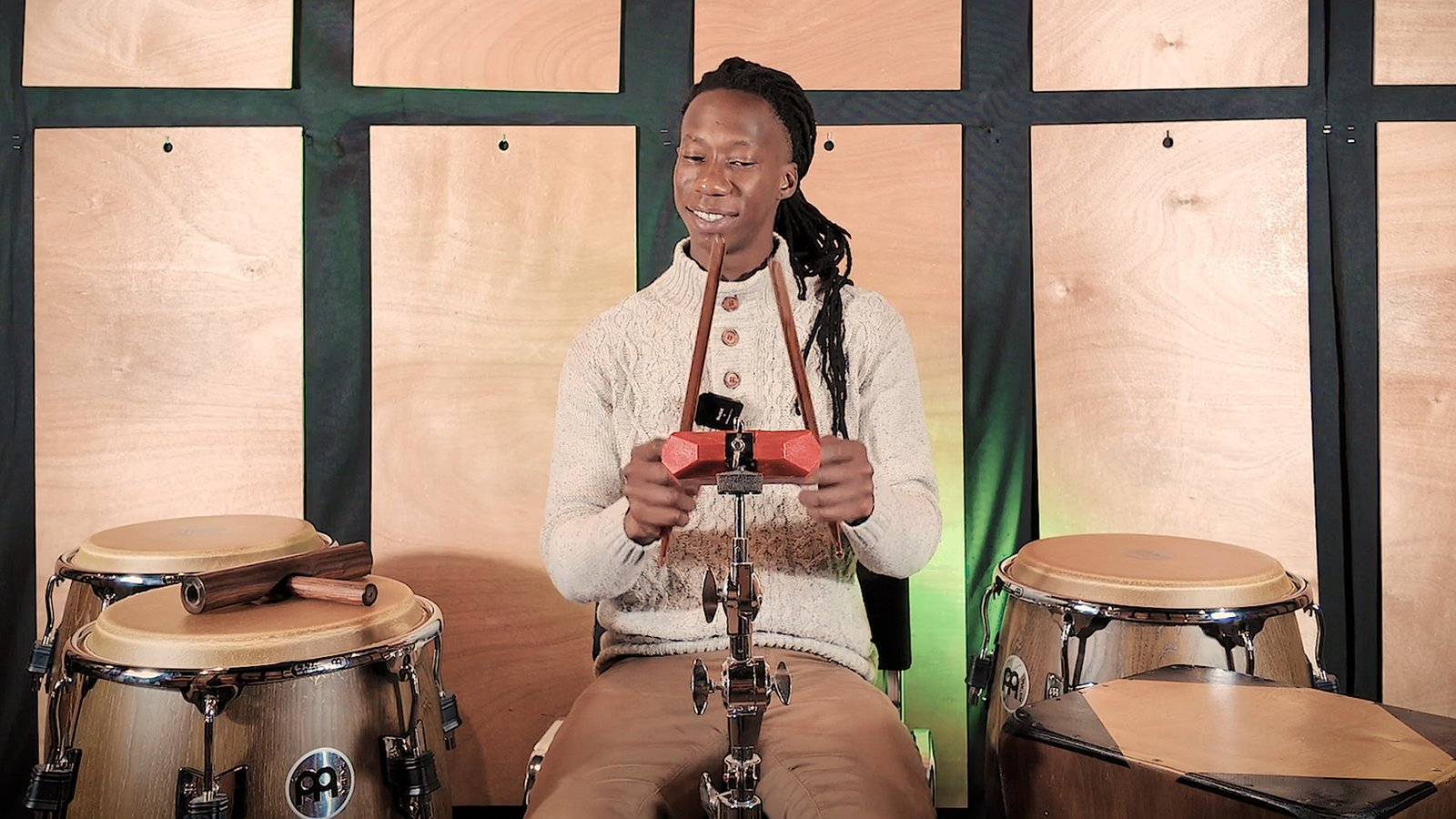
This course dives deep into the catá as a fundamental element of Cuban rumba. You’ll learn its origins, its relationship to the clave, and how to hold time and groove with clarity, control, and musicality in Guaguancó, Yambú, and Columbia.

What does the course cover?

  • The origin of the catá and its traditional names.
  • The direct relationship between catá and clave.
  • The two basic Guaguancó patterns.
  • The catá in Yambú and its slower cadence.
  • The catá in Columbia (six-eight) without accent patterns.
  • Stick control, sound quality, and time stability.

Main ideas of the course

  1. The catá supports; it’s not decoration.
  2. Catá and clave operate as one unit.
  3. Time control matters more than speed.
  4. Playing relaxed produces a solid groove.
  5. Before improvising, you must know how to accompany.

In this course, you will explore how to:

  • Keep stable time without losing the groove.
  • Play the catá with a clear, balanced sound.
  • Recognize the catá’s role in each rumba style.
  • Enter correctly with the clave and the campana.
  • Support the song and percussion without crowding the musical space.

Key terms listed in the order they appear in the episodes.

  • Catá: Wooden instrument that marks and sustains the time in rumba.

  • Guagua / Palitos: Traditional popular names for the catá.

  • Abakuá: Afro‑Cuban religious society that influenced the creation of rumba.

  • Pattern: A repeated sequence of strokes or sounds in music.

  • Flow: The feeling of the rhythm moving naturally, without stiffness.

  • Pulse: The internal reference of time in music.

  • Groove: The rhythmic balance that makes the music “walk.”

  • Yambú: The slowest and softest rumba style, associated with elegance and sweetness.

  • Cadence: The smooth, balanced motion of the rhythm.

  • Danzón: A traditional Cuban rhythm that influenced Yambú.

  • Columbia: A fast, energetic style of Cuban rumba.

  • Six-Eight: The meter used in Columbia.

  • Without Accents: Playing without emphasizing any strokes more strongly.

  • Campana: A metal bell that keeps time in Columbia and guides the groove.

  • Round Tone: A clear, even sound without tension.

  • Tempo: The speed at which the music is played.

Starter:

1 course pass/mo.

9

/month

+ tax as applicable

Pro:

3 course passes/mo.

19

/month

+ tax as applicable

Master:

12 course passes/mo.

59

/month

+ tax as applicable

Elite Promo:

12 course passes/yr.

299

/year

+ tax as applicable

Course details
Duration 60 min
Episodes 5
Level Basic

Explore more courses

Welcome

Register form