The Tres-Dos — Internal Harmony & Response in Rumba

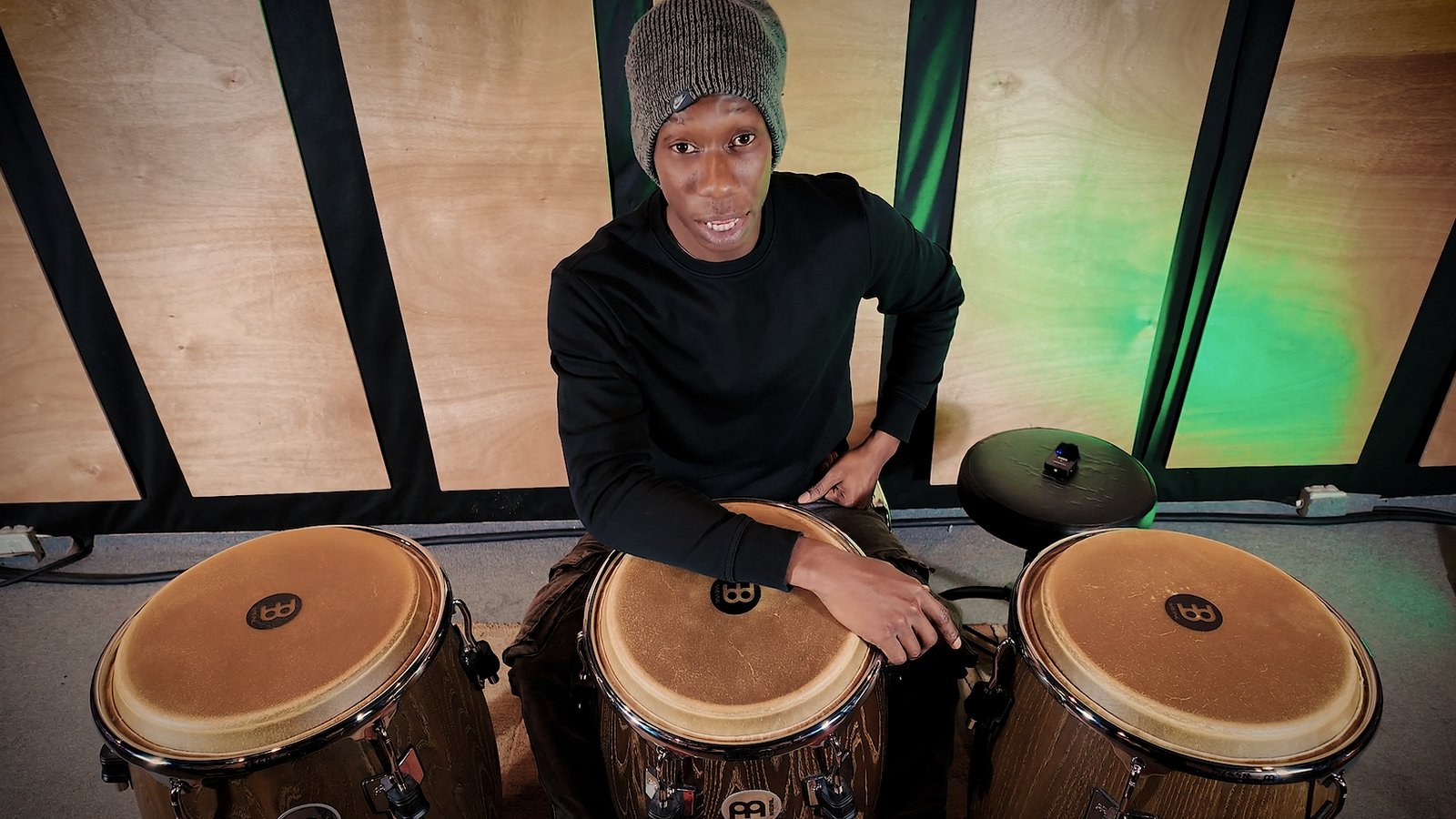
This course invites you to explore the essence of the 3-2 pattern inside Cuban rumba. With Machito you’ll discover how it was born, how it evolved into its modern form, and how to build a solid march before adding variations, combinations and bass tones, always respecting the interaction with tumbador and quinto. Get ready to feel and play the 3-2 as a living foundation of Guaguancó.

What does the course cover?

  • History and function of the 3-2: from its late arrival in rumba to its current placement inside the clave.
  • Differences between 3+2 clave and the ‘2+3’ perception by resonance, with practical examples.
  • Construction of the 3-2 march (masacote): tapados, abiertos and the internal cushion.
  • Hand techniques, control of the bass tone on the second stroke of the clave, and pulse cleanliness.
  • Variations, entrances and exits, combinations and space management with tumbador and quinto.
  • Integration of presionados and the influence of 6/8 to enrich the rhythmic discourse.

Main ideas of the course

  1. Base first: the march is the soul; variations come later.
  2. The clave leads: the bass tone of the 3-2 dialogues with its second stroke and orders entrances and exits.
  3. Respecting the codes: the 3-2 responds to the tumbador; you don’t vary without a call.
  4. Cleanliness over virtuosity: playing clearly is more important than playing a lot; evolution respects the root.

In this course, you will explore how to:

  • Anchor the 3-2 in the 3+2 clave and count precise entrances: after the ‘four,’ the ‘one,’ or the ‘two,’ without losing the flow.
  • Maintain a stable, clean march at any tempo, prioritizing clarity and projection of the tapados.
  • Place the bass tone on the second stroke of the clave and achieve round abiertos with controlled forearm and wrist.
  • Develop variations and combinations while respecting the codes: responding to the tumbador and leaving space for the quinto.
  • Integrate presionados and 6/8 elements to enrich the discourse without breaking the base or crossing the clave.

Key terms listed in the order they appear in the episodes.

  • 32 (TresDos): Drum pattern that dialogues with the clave and sustains the rhythmic cushion of rumba.
  • Clave (3+2): Five‑stroke guiding pattern; in rumba ‘three plus two,’ even if sometimes perceived as ‘2+3.’
  • First Beat of the Clave (the ‘One’): Historical starting point where the 3-2 was placed.
  • ‘2+3’ Resonance: Perception that confuses the real order due to the ringing tail of the third stroke’
  • Marcha / Masacote: Continuous rhythmic cushion that supports the ensemble.
  • Tapado: Muted, dry stroke that gives clarity.
  • Abierto: Resonant stroke; round sound with forearm control.
  • Entrance / Exit: Moment to begin and return to the base without breaking the time.
  • Codes: Implicit rules of call‑and‑response between tumbador, 3-2 and quinto.
  • Tresillos: Ternary grouping used in advanced variations; requires control to avoid crossing the clave.
  • Presionado: Sustained/pressed stroke that is neither fully abierto nor tapado.
  • 6/8: African ternary metric present in many toques; here used as rhythmic influence for the 3-2.
  • Combination: Union of two or more variations separated by one or two abiertos to form a discourse.
  • Graves (Bass Tones) in Variation: Intentional use of the bass tone as supportive accent or brief melody inside the response.
  • Guarapachangueo: Modern flavor/style influenced by developments of the 3-2; mentioned here as influence, not core content.

Starter:

1 course pass/mo.

9

/month

+ tax as applicable

Pro:

3 course passes/mo.

19

/month

+ tax as applicable

Master:

12 course passes/mo.

59

/month

+ tax as applicable

Elite Promo:

12 course passes/yr.

299

/year

+ tax as applicable

Course details
Duration 70 min
Episodes 5
Level Basic

Explore more courses

Welcome

Register form