
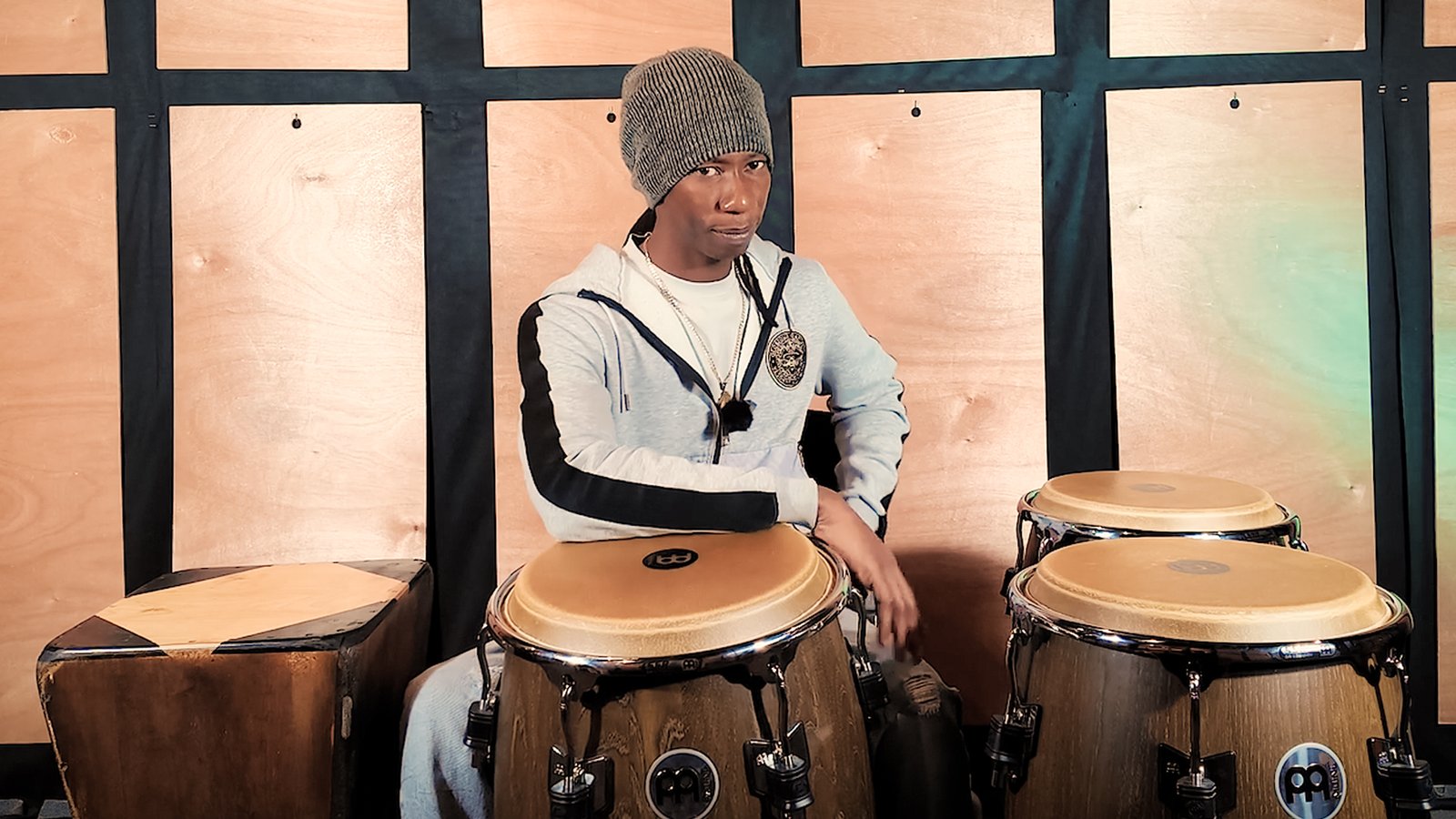

In this episode, Machito revisits the traditional Yambú base: a clean, breathing march guided by the lalaleo and the slow character of the style. He explains the use of the double low tone as a natural accent and how to think of time in 4- and 8-beat cycles to open the bar without rushing it. He also shows how repeating the singer’s phrases allows for subtle variations without abandoning the tradition.
In this episode, you work on a variation introduced by Machito: open tones combined with mazacotes, while maintaining time with the guiding hand so the march never feels suspended. The 8-beat cycle is developed, focusing on where the variation enters and exits before returning to the base. Musical criteria are also explored—when not to vary, especially if the chorus or the lead singer does not sustain the necessary energy.
In this episode, the variation evolves into a new base with the introduction of conga and cajón raspadura. Machito explains how to play the idea across two claves, sustain open tones with stability, and adapt the nuances of Yambú. The structure is practiced with singing, and he shows how to reorganize the part when playing with two congas, always respecting the melody of the canto.
In this episode, you explore the Matanzas approach to Yambú: the essential manoteo, specific low tone accents, and counting exercises to internalize the pattern. The Havana and Matanzas perspectives are compared while respecting both traditions, and you practice simplifying the march to maintain clarity and presence without excessive ornamentation.
In this bonus episode, Machito reviews the fundamentals of the tumbador in Yambú from both Havana and Matanzas, focusing on tradition, variation, and where innovation can be introduced within the groove.