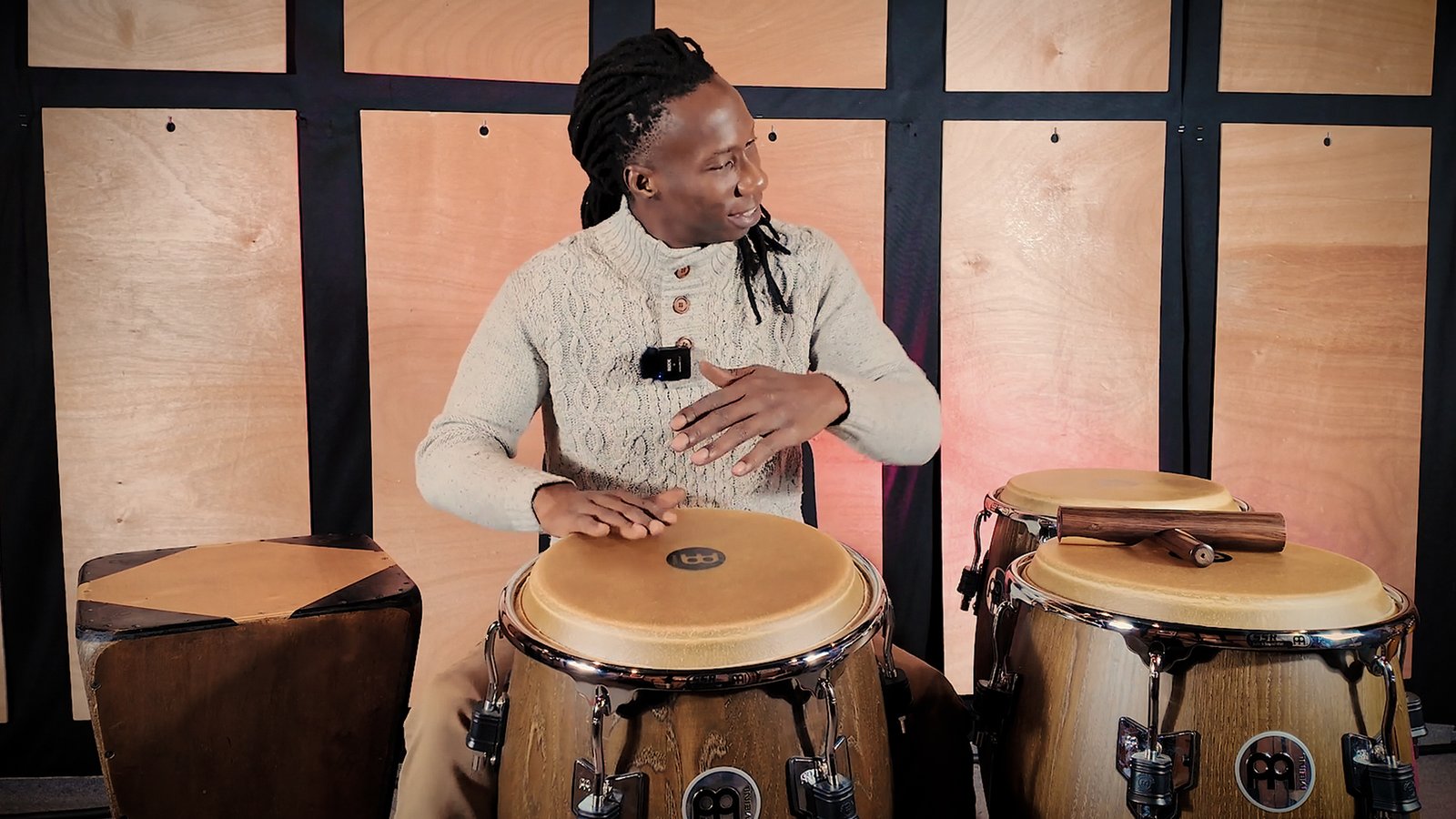
The Tumbador in Columbia — Roots, Groove & Evolution

This course introduces you to the language of the tumbador in Columbia, starting from its traditional base (rural influences, Bantú/Bembé six-eight ternary pulse, cajón maleta) and moving toward variations and more open grooves without losing the codes of rumba. Machito guides you from the root toward evolution, with emphasis on clave, low tones, muted tones, mazacote, and respect for the dialogue with the tres-dos and quinto.

What does the course cover?

  • Rural origin of Columbia, its relationship with Bantú/Bembé (six-eight ternary feel), and the “llorado” as a vocal opening.
  • Traditional tumbador base: right hand marking time, two open tones, left hand across four beats.
  • Use of mazacote and differences in feeling compared to Bembé.
  • Central variation with presionados: entry on beat one and a clean return to the base.
  • Low tone–muted tone alignment: low tone on the second stroke of the clave; muted tone at the midpoint of the clave.
  • A more open groove to expand phrasing while respecting call-and-response codes.

Main ideas of the course

  1. Root first: from tradition to clarity to evolution.
  2. The clave leads the way: low tones on the second stroke, muted tones in the center.
  3. The tumbador does not invade—it respects the space of the tres-dos and quinto.
  4. Clarity over speed.

In this course, you will explore how to:

  • Place the low tone on the second stroke and the muted tone at the midpoint of the clave.
  • Maintain a solid groove at fast tempo without breaking the mazacote.
  • Enter and exit variations cleanly using presionados.
  • Move between grooves without losing the rhythmic anchor.
  • Open your phrasing while respecting the space of the tres-dos and quinto.

Key terms listed in the order they appear in the episodes.

  • Columbia: Fast rumba style focused on competition and individual skill.

  • Llorado: Initial vocal call that sets the tone.

  • Cajón Maleta: Traditional precursor of the tumbador.

  • Caja: Low-pitched supporting drum concept in Afro-Cuban traditions.
  • Bembé (Six-Eight): Afro-descendant ritual pattern influencing Columbia.

  • Mazacote: Internal layer of ghost notes (fantasmas) that provides weight.

  • Manoteo: Continuous hand motion that adds movement and density to the groove.
  • Pressed Tone (Presionado): Sustained stroke between muted tone and open tone.
  • Campana (Six-Eight): Bell pattern in a six-eight ternary feel that guides the pulse and supports the groove.
  • Clave Cycle: Complete rhythmic cycle that organizes the return.

  • Groove Transition: Movement between patterns while maintaining the clave.

  • Open Groove: Pattern with more space for variations.

  • (4+2): Variation formula used in this module.

  • Códigos: Implicit call-and-response rules between instruments.

  • Drum Dialects: Mutual adjustments between tumbador, tres-dos, and quinto.

  • Canto: The vocal part of rumba that guides phrasing, dynamics, and interaction.
  • Space of Tres-Dos/Quinto: Rhythmic boundaries that prevent overlap and clutter.

Starter:

1 course pass/mo.

9

/month

+ tax as applicable

Pro:

3 course passes/mo.

19

/month

+ tax as applicable

Master:

12 course passes/mo.

59

/month

+ tax as applicable

Elite Promo:

12 course passes/yr.

299

/year

+ tax as applicable

Course details
Duration 60 min
Episodes 5
Level Intermediate

Explore more courses

Welcome

Register form