The Quinto of Yambu — Tradition, Cadence & Evolution

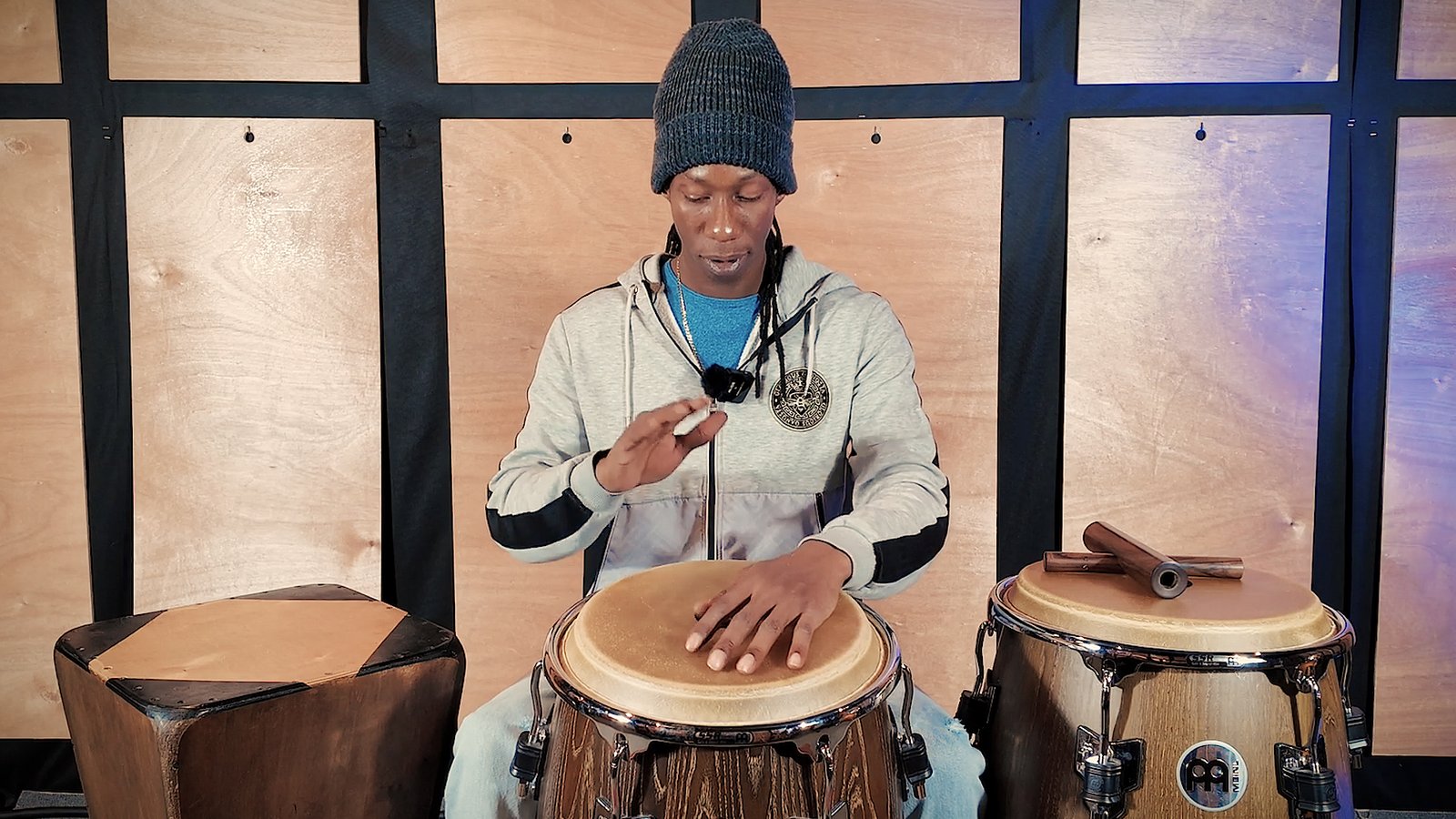
This course explores how the quinto functions within Yambú, one of the most cadential and delicate expressions of Cuban rumba. Machito proposes a path that starts from tradition — quinto, tumbador, canto, space and silence — and moves toward a natural evolution, incorporating the 3-2 and other contemporary resources without breaking the fundamental codes.

What does the course cover?

  • The role of the quinto in traditional Yambú: slow cadence, space and silence.
  • Building a solid quinto base using tapados and points of support.
  • The relationship between canto, clave and quinto as the core of the rhythmic discourse.
  • Phrasing in 4- and 8-beat cycles: repetition, variation and return to the base.
  • Traditional Yambú codes: when to enter, when to leave and when to remain silent.
  • Evolution of Yambú: incorporation of the 3-2 and modern resources without losing the root.

Main ideas of the course

  1. Fewer strokes, more intention.
  2. Yambú is space, silence and cadence.
  3. The quinto speaks, but first it listens.
  4. Tradition does not limit: it organizes.
  5. Without roots, there is no evolution.

In this course, you will explore how to:

  • Build a solid quinto base in Yambú using tapados and points of support.
  • Sustain the slow cadence without breaking the time or invading the canto.
  • Phrase clearly and with control in 4- and 8-beat cycles.
  • Enter and exit variations without losing the rhythmic anchor or the context.
  • Improvise with intention while respecting the traditional codes of Yambú.

Key terms listed in the order they appear in the episodes.

  • Yambú: A rumba with slow tempo, cadential character and strong use of silence.

  • Quinto: Solo drum that dialogues with the canto and responds to the context.

  • Tumbador: Low-pitched base drum that sustains the cadence of Yambú.

  • Tapado: Dry stroke used as rhythmic support.

  • Cadence: The sense of slow, balanced flow of time.

  • Cliché: Base phrase that organizes the quinto discourse.

  • Phrasing (Fraseo): The way strokes are organized within time.

  • Speaking (Hablar): Improvising while respecting the musical context.

  • Space of the canto: Moments when the drum must accompany, not invade.

  • 4/8-beat cycle: Temporal unit used to build and close phrases.

  • Base: Main pattern to which one always returns.

  • Variation: Momentary change within a cycle.

  • Cuerpo del tema: Initial section where the canto presents the message.

  • Montuno: Final section with choruses and greater expressive freedom.

  • Entering and exiting: Fundamental principle of traditional quinto playing.

  • 3-2: Intermediate drum that expands rhythmic support.

  • Displacement: Rhythmic movement outside the main stroke.

  • Contemporary language: Modern resources developed over time.

  • Code: Implicit rule that maintains musical order.

  • Evolution: Conscious change without losing the root.

  • Vivencia: Deep, lived experience of the genre.

  • Active listening: Constant attention to canto and time.

  • Patience of time: Learning without rush, from cadence.

Starter:

1 course pass/mo.

9

/month

+ tax as applicable

Pro:

3 course passes/mo.

19

/month

+ tax as applicable

Master:

12 course passes/mo.

59

/month

+ tax as applicable

Elite Promo:

12 course passes/yr.

299

/year

+ tax as applicable

Course details
Duration 65 min
Episodes 7
Level Intermediate

Explore more courses

Welcome

Register form